

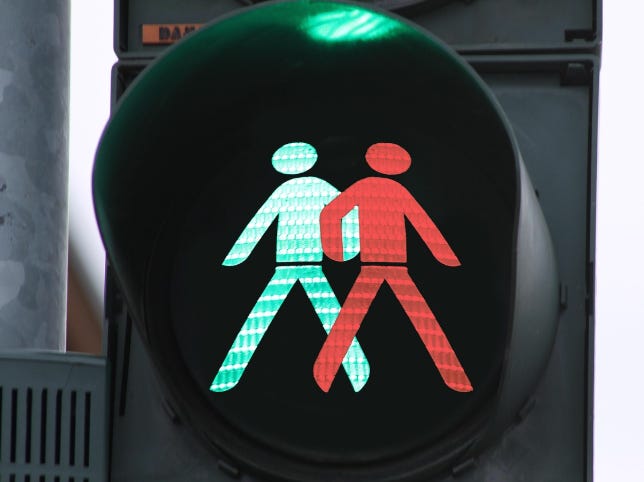
There is a familiar little pantomime in public life. A person with a newspaper column, a parliamentary platform, a large social media following, an endowed chair, a podcast studio, a publishing contract, or some other obvious means of communication says something provocative. People object. Some of them are rude. Some of them are tedious. A few are probably deranged, because it is the internet, and the internet’s main contribution to civilisation is making every village idiot discoverable by keyword search.
Then comes the solemn announcement: they have been silenced.
This is now one of the dullest rituals in public argument. A public figure says something in public, is publicly criticised, and then behaves as if criticism were a form of censorship. Disagreement becomes an attack. Rebuttal becomes intimidation. A lost booking becomes cancellation. A hostile review becomes persecution. A reply underneath a post becomes evidence that free speech itself has entered hospice care.
The problem is not that these people are always lying. Sometimes criticism is ugly. Sometimes it is excessive. Sometimes it is coordinated, malicious, dishonest, or frightening. Public argument can turn into public punishment with alarming speed. The problem is that we have become remarkably bad at distinguishing the different things that can happen after someone says something objectionable.
Criticism, discomfort, reputational consequence, harassment, exclusion, censorship and abuse are all real things. They are not the same thing.
That distinction matters because public life increasingly rewards us for collapsing them. To call disagreement persecution is to claim the moral status of the injured without accepting the intellectual burden of being answered. To call every consequence accountability is to claim the moral status of justice without accepting the ethical burden of proportion. In both cases, the argument is degraded by the same temptation: the wish to be the victim in a story where victimhood settles the question.
The strange comfort of being attacked
It is not hard to see why the language of persecution is appealing. It simplifies everything. If I am being persecuted, I do not need to ask whether the criticism has merit. I do not need to consider whether I was careless, arrogant, ignorant, cruel, or simply wrong. I do not need to distinguish between the weak version of the criticism and the strong one. I do not even need to answer the argument. I can answer the fact that the argument is being made.
This is especially useful for powerful people. A politician with a press office, a columnist with a weekly national platform, or an academic with institutional security can turn a few hostile replies into a morality play about courage. The posture is almost always the same. They are not merely being disagreed with; they are being silenced. They are not being asked to defend a claim; they are being punished for thinking. They are not encountering opposition; they are standing bravely against an orthodoxy.
Sometimes there is a real orthodoxy. Sometimes institutions do punish dissent. Sometimes social and professional circles become narrow, self-protective and vindictive. I do not want to pretend otherwise. But there is a difference between being unable to speak and being unable to speak without reply. A great deal of contemporary free speech panic depends on pretending those are the same thing.
Being criticised is not censorship. Losing an argument is not being silenced. Being thought badly of is not persecution. Even being treated unfairly is not, automatically, proof of a totalitarian culture closing in around you. Sometimes it means you said something poor and people noticed. Sometimes it means you said something defensible, but clumsily. Sometimes it means your audience is less indulgent than you had hoped. Sometimes, yes, it means the crowd is behaving badly. The point is that these possibilities have to be distinguished, not bundled together into one grand theory of martyrdom.
There is a particular kind of public figure who seems to experience all criticism as an existential violation. Their belief in free speech is so absolute that it apparently includes the right to speak without anyone forming a low opinion of them afterwards. They do not want censorship, certainly. But they also do not want contradiction, reputational risk, institutional judgement, social disapproval, or the ordinary unpleasantness of being held to one’s words.
This is not a free speech position. It is a demand for emotional immunity.
But the crowd is not innocent either
The difficulty, of course, is that some people really are treated with disproportionate cruelty.
This is where the lazy anti-woke version of the argument fails. Nobody is forbidden from saying anything any more is a bad argument not because every public shaming is justified, but because it treats all criticism of public speech as hysteria. It collapses in one direction exactly as its opponents collapse in the other. It cannot distinguish between legitimate accountability and mob cruelty because, at some level, it does not want to. It wants a simple story in which the speaker is brave, the critic is censorious, and the content of what was said barely matters.
That story is too neat. Public criticism can be necessary and still become abusive. A person can have said something genuinely harmful and still be treated unjustly. A complaint can begin from a real injury and become an excuse for ritual humiliation. A demand for accountability can become a demand that someone be made permanently socially, morally, and professionally untouchable.
ContraPoints’ Canceling is useful here precisely because Natalie Wynn is not making the standard lazy complaint that accountability has gone too far. Her argument is more careful than that. She distinguishes criticism of actions and beliefs from the construction of a totalising case against the person. The danger is not that people object; it is that objection becomes a machine for producing certainty, abstraction, essentialism, unforgivability, guilt by association and moral dualism. Her account identifies recurring tropes such as presumption of guilt, abstraction, essentialism, pseudo-moralism, no forgiveness, the transitive property of cancellation and dualism.
That list remains useful because it describes a recognisable emotional process. Something specific happens: a sentence, a joke, a association, a clumsy comment, a bad argument, an omission, a silence. Then the specific thing is abstracted into a pattern. The pattern becomes evidence of character. The character becomes essence. The essence becomes destiny. At that point, nothing the person says can really matter, because the conclusion has moved beyond conduct into ontology. They did not merely do something wrong. They are wrong. They are the kind of person to whom wrongness permanently belongs.
This is where accountability becomes theatre. The aim is no longer to correct, repair, deter, educate, protect, or understand. The aim is to establish a moral order in which everyone knows where to stand. The accused must become a symbol. The crowd must become righteous. The bystander must participate or risk suspicion. The original issue may remain somewhere in the background, but the real drama has shifted. It is no longer about what happened. It is about who may be seen to condemn it with sufficient force.
There is a brutal comfort in this too. If the public figure enjoys imagining themselves as persecuted, the crowd enjoys imagining itself as justice. Both positions are morally flattering. Both avoid the harder work of judgement.
Conflict is not abuse
Sarah Schulman’s Conflict Is Not Abuse gives this problem a deeper ethical frame. Schulman’s central concern is not that abuse is imaginary. Quite the opposite. Her argument depends on the need to distinguish abuse, involving domination or power over another person, from conflict, which involves struggle, disagreement, discomfort, fear, hurt, projection, misrecognition and responsibility on more than one side. The danger is that overstating harm can justify escalation, shunning and cruelty. A 2024 Heterodox Academy essay summarises the point as a critique of the tendency to misrepresent disagreement as abuse, while noting that Schulman writes from within traditions concerned with inclusion, safety and equity rather than from a reactionary rejection of them.
That matters because the phrase conflict is not abuse is easily misused. In the wrong hands, it can become a slogan for minimising real harm. It can be made to sound as if people should simply toughen up, stop complaining, and accept mistreatment as the price of adulthood. That is not the serious version of the argument. The serious version is more demanding.
It asks us to notice when the language of harm becomes a way of avoiding conflict rather than addressing it. It asks whether the claim I feel unsafe is sometimes being used to mean I feel criticised, I feel ashamed, I feel exposed, I feel socially at risk, or I do not want to remain in a relationship of mutual obligation with this person. Those feelings may be real. They may be painful. They may deserve care. But they are not all the same as danger.
This is a hard distinction to make because feelings do not arrive pre-sorted into ethically convenient categories. Discomfort can be a warning sign. Fear can be rational. Anger can indicate that a boundary has been crossed. But feelings can also be distorted by pride, shame, trauma, status anxiety, political identity, group loyalty, envy, projection, embarrassment and the ordinary human inability to bear being wrong in public.
We should be cautious here. There are many contexts in which people understate harm because naming it is costly. Abuse is often minimised by abusers, institutions and bystanders. Victims are routinely pressured to interpret coercion as misunderstanding, violation as awkwardness, discrimination as banter, and cruelty as mere difference of opinion. Any argument about harm inflation that ignores this becomes morally useless.
But the reverse error also exists. People can overstate harm because doing so grants moral clarity. If I am unsafe, I need not negotiate. If I am abused, I need not repair. If I am persecuted, I need not listen. If the other person is dangerous in essence rather than wrong in conduct, then cruelty towards them can be redescribed as protection from them.
This is one of the most unpleasant truths about public argument: people can use the language of vulnerability to dominate other people. Not always. Not even mostly, perhaps. But often enough that any serious ethics of argument must account for it.
Criticism, consequence, punishment
The distinction we need is not between speech and censorship, or between accountability and impunity. Those binaries are too blunt. The better distinction is between criticism, consequence and punishment.
Criticism is the ordinary process of being answered. It can be sharp, moral, emotional, public and unpleasant. It can include mockery. It can include anger. It can include the judgement that someone’s view is cruel, foolish, dishonest or beneath consideration. No serious account of free expression can require people to listen politely to every claim as if the world were a seminar room and all participants had done the reading.
Consequence is what happens when speech changes how people relate to the speaker. If you say something, others may trust you less. They may not want to buy your book, invite you onto a panel, vote for you, collaborate with you, date you, hire you, or keep pretending that they do not know what you think. This is not automatically censorship. It is part of living among other people, who also have agency, judgement and freedom of association.
Punishment is different. Punishment is organised deprivation. It seeks to impose a cost. It may be formal or informal, institutional or social, proportionate or wildly excessive. Sometimes punishment is justified. A person who abuses power, harasses colleagues, fabricates evidence, incites hatred, or uses a platform to make others materially less safe may deserve more than disagreement. But punishment needs standards. It needs evidence, proportionality, process, limits and some imaginable route back, unless the offence is so severe that exclusion really is the point.
Much of our confusion comes from calling all three things by the same names. The person criticised calls it persecution. The crowd calls punishment accountability. The institution calls panic safeguarding. The audience calls spectacle justice. Everyone reaches for the word that gives their side moral advantage.
A healthier culture of argument would not abolish consequences. That would be impossible and undesirable. It would ask more precise questions. What exactly was said or done? What is being criticised: the claim, the conduct, the pattern, the institutional role, or the person’s entire character? Who has power here? What harm is being alleged, and what evidence supports it? What response would be proportionate? What would repair look like? Is the aim to protect others, correct the record, change behaviour, deter repetition, or simply enjoy seeing someone suffer?
That last question is worth asking more often than we do.
The appetite for moral theatre
One reason public argument has become so deformed is that social media makes bystanders feel like participants. Most of us are not resolving the issue. We are not investigating, mediating, repairing, apologising, forgiving, compensating, changing institutions, or doing any of the patient work that justice usually requires. We are watching, reacting, sorting ourselves into position, and calling that politics.
This creates a strange economy of display. The public figure displays injury. The critics display righteousness. The institution displays seriousness. The audience displays discernment. Everyone performs the part most likely to protect their standing among the people whose opinion they care about.
The cruelest part of this is that it often does little for the people actually harmed. A person who has been mistreated may need acknowledgement, apology, changed behaviour, material redress, privacy, protection, time, or the restoration of trust. What they often get instead is a crowd using their injury as raw material for its own self-expression. The harm becomes content. The victim becomes evidence. The accused becomes symbol. The bystanders become morally entertained.
This is not accountability. It is punishment as community bonding.
Nor is it confined to any one political tribe. The style differs, but the structure recurs. The right has its own cancellation rituals, its own inflated victimhood, its own appetite for shunning, its own habit of treating criticism as persecution and difference as civilisational threat. The liberal-left has its own weakness for moral sorting, purity spirals and the transformation of conflict into harm. Centrists have their own melodrama too, usually involving the tragic silencing of very well-paid people who appear to be expressing their silenced views on every available platform.
The point is not that everyone is equally guilty in every case. They are not. The point is that the underlying temptation is widely distributed. We want the status of the victim because it makes our aggression feel defensive. We want the language of justice because it makes our punishment feel clean. We want the drama of moral clarity because the ordinary work of judgement is slow, compromised and unsatisfying.
The duties of being hurt
None of this means that people should be calm in the face of cruelty. Anger is not a failure of reason. Sometimes anger notices what politeness has been trained to conceal. There are situations where civility is used to protect the powerful from the emotional consequences of what they have done. There are arguments so degrading that treating them as respectable contributions to debate becomes its own form of complicity.
But being hurt does not make every response ethical. Being right does not make every tactic just. Being vulnerable does not remove all responsibility for what one does with the power that vulnerability can generate.
This is the part we tend to avoid. Victimhood has moral significance, but it is not moral infallibility. To have been harmed is to deserve care, not to acquire unlimited authority over the truth. To be angry is understandable, but anger can still mislead. To demand accountability may be necessary, but accountability without proportion becomes revenge with better branding.
The same applies to those criticised unfairly. If someone misrepresents you, you may defend yourself. If a crowd lies about you, you may object. If an institution panics and throws you under the nearest reputational bus, you may call that cowardice. But none of this proves that all criticism is bad faith, that all offence is manufactured, or that you have been persecuted merely because people no longer admire you as effortlessly as before.
There is no escape from judgement. That is the annoying thing about living with other people.
What repair would require
A better public culture would need to recover some unfashionable habits: specificity, proportion, patience, distinction and repair.
Specificity means saying what the offence actually was. Not the worst possible abstraction of it; the thing itself. The sentence, the action, the decision, the pattern, the failure. Without specificity, criticism becomes atmosphere. Once criticism becomes atmosphere, the accused cannot answer it and the crowd cannot assess it. Everyone is left arguing over vibes, which is among the least dignified ways to spend a human life.
Proportion means asking what response fits the wrong. Some errors require correction. Some require apology. Some require changed conduct. Some require institutional sanction. Some require exclusion. Some require nothing more than public disagreement. A culture that cannot distinguish these will oscillate between impunity and overkill.
Patience means resisting the demand to decide instantly. This is difficult because online argument punishes hesitation. Silence is treated as complicity; uncertainty as cowardice; nuance as laundering harm. But speed is not the same as moral seriousness. Often it is the opposite. The faster a crowd demands judgement, the more likely it is that people are being asked to perform certainty rather than reach it.
Distinction means refusing the cheap inflation of categories. Disagreement is not persecution. Discomfort is not abuse. Criticism is not censorship. Consequence is not always cancellation. Punishment is not always accountability. But the reverse matters too. Harassment is not debate. Institutional cowardice is not neutrality. Public humiliation is not education. Shunning is not repair.
Repair means believing that people can sometimes do better. Not always. Not cheaply. Not without responsibility. But sometimes. A moral culture with no route to repair is not serious about improvement. It is serious about disposal.
This is one of the contradictions in punitive public argument. It speaks constantly in the language of harm reduction, education and accountability, but often behaves as if people are fixed moral objects. Once named, they are known. Once known, they are finished. That is not an ethic of transformation. It is an ethic of contamination.
Nobody wants to be powerful
Perhaps the deepest problem is that everyone in public argument wants the moral status of the victim and almost nobody wants the moral duties that come with power.
Public figures with large platforms describe criticism as silencing because it is more flattering than admitting they are powerful people being answered by less powerful ones. Crowds describe punishment as accountability because it is more flattering than admitting that a large number of people can become powerful precisely by acting together against one person. Institutions describe evasive risk management as care because it is more flattering than admitting they are frightened of bad publicity. Bystanders describe participation as solidarity because it is more flattering than admitting that they may be enjoying the spectacle.
Power is not a stable possession. It moves. A person may be powerful in one context and vulnerable in another. A columnist may have institutional reach and still be subject to racist abuse. An activist may be marginalised in society and still be capable of cruelty within a community. A crowd may include many powerless people and still, as a crowd, wield terrifying force. Any serious ethics of argument has to follow power as it moves rather than assigning it permanently to whichever side has the better slogan.
That is why the central claim has to be double-edged.
Being criticised is not persecution. Being disagreed with is not silencing. But being publicly punished without proportion, process or repair is also not accountability.
Hold only the first half and you become smug about cruelty. Hold only the second and you become indulgent towards self-pity. Hold both and you have to do the harder work: distinguishing conflict from abuse, criticism from censorship, consequence from punishment, and justice from the pleasures of moral theatre.
This will not make public argument pleasant. It probably should not be pleasant all the time. Some disagreements matter because real things are at stake: rights, dignity, safety, truth, institutions, livelihoods, reputations, and the terms on which people can live together. But it might make argument more honest.
Disagreement is not persecution. Nor is every punishment justice. The beginning of moral seriousness is knowing the difference.