

There are, broadly speaking, two ways to panic about Doctor Who right now.
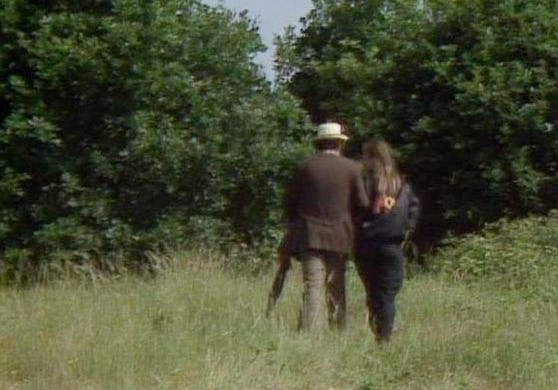
A Christmas special disappears, a showrunner leaves, the familiar machinery of production goes quiet - and a certain part of the audience immediately hears the hollow tolling of 1989. Somewhere, in the deeper recesses of British television memory, Sylvester McCoy is wandering away from the TARDIS again, the lights are going out, and a generation of fans are being quietly advised to make do with novels, audio dramas, fanzines, rumours, VHS tapes and increasingly elaborate grief.
It’s not difficult to understand why that anxiety has resurfaced. Doctor Who has form here. The show has been cancelled before, or at least allowed to die in the particular institutional way large organisations sometimes prefer: slowly, awkwardly, with everyone insisting that no final decision has been made until the final decision has somehow already happened. For fans with a long enough memory, the language of pauses, futures, reassessments and new directions can sound less like renewal than a polite letter from the undertaker.
But I don’t think that is quite what is happening now.
The boring-but-true answer is that Doctor Who is almost certainly coming back. It is too valuable, too recognisable, too internationally marketable, and too deeply embedded in the BBC’s own story of itself to be casually abandoned. There is a brand architecture, to use the sort of phrase that ought to be kept several rooms away from Doctor Who but, regrettably, explains quite a lot.
Doctor Who is not a fragile cult object in the way it was in the early 1990s. It is not merely an old programme with a loyal audience and a questionable place in the schedules. It is one of the BBC’s few genuinely global pieces of television mythology. You do not need to be especially sentimental to see why the corporation would want to keep hold of it. You only need a spreadsheet.
So the interesting question is not: will Doctor Who survive?
The interesting question is: what does survival mean?
Because there is a version of survival that is not very reassuring at all. Doctor Who could return with a healthy budget, an international production partner, a fresh visual identity, a new Doctor, a new format, and a press release full of all the correct nouns. It could be glossy, expensive, technically competent, and broadly intelligible to a global streaming audience. It could look much more impressive than several eras of Doctor Who have ever looked. It could have convincing aliens, coherent action sequences, a cinematic colour grade and a season-long mythology leading to a fulfilling ending.
And it could still not feel like Doctor Who.
That is the concern worth taking seriously. Not that the BBC will bury the show in a filing cabinet and pretend it’s gone to live on a farm. Rather, that in the process of securing the programme as a valuable piece of intellectual property, it may become less clear who is responsible for understanding what the property actually is.
Doctor Who is very easy to describe badly. It is a science-fiction series about a time-travelling alien who changes face and travels around in a police box. This is true in the same sense that Hamlet is a play about a student with family problems. The description is not false, exactly. It is just so thin that it misses nearly everything that matters.
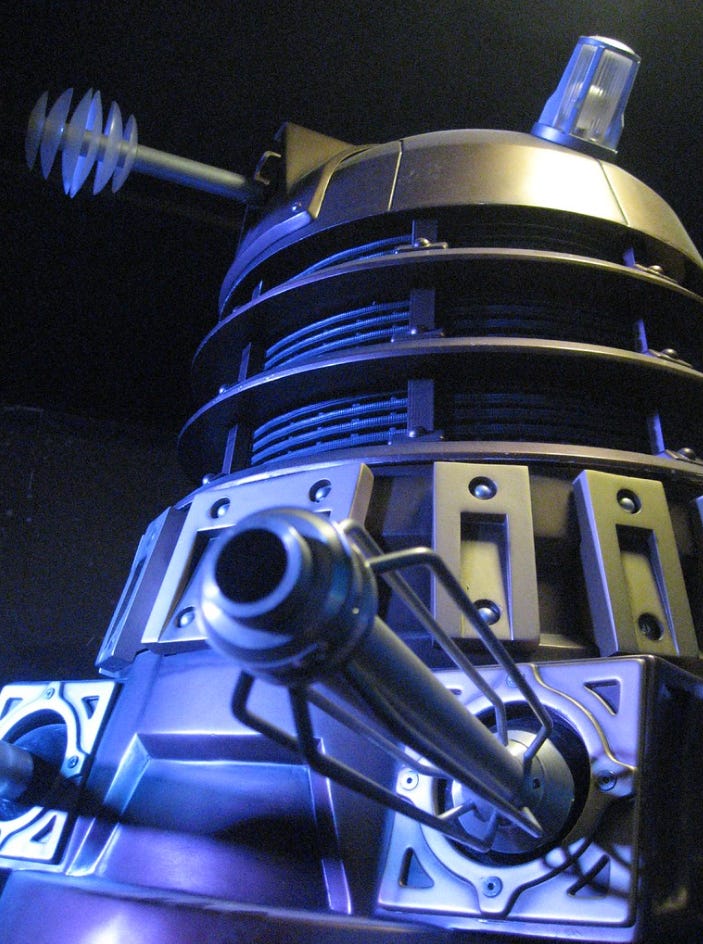
Doctor Who is not simply science fiction. It is ‘family show’ 1960s-era children’s television that grew up without ever entirely ceasing to be children’s television. It is gothic horror in municipal corridors. It is satire with monsters in it. It is an adventure serial, a morality play, a theatrical contraption, a fairytale about curiosity, a weekly argument against cruelty, and a machine for turning budgetary inadequacy into imaginative force. Its cheapness was never merely cheapness; at its best, it became a kind of expressive grammar. A quarry somewhere in South Wales could be an alien world because the programme had already trained you to meet it halfway. A corridor could be frightening because the camera, the music and the idea had decided it was. A sink plunger stuck on a pepper-pot could become an icon because Doctor Who, at some fundamental level, has always understood that terror is not the same thing as realism.
That is why the tender matters.
Not because independent production is inherently bad. It plainly isn’t. Doctor Who has already been made through various production arrangements, and the modern revival has itself depended on partnerships, outside companies, complex rights structures and the ordinary practical machinery of television. Nor is the point that only British writers, or only lifelong fans, or only people who can identify The Sensorites from a blurred production still should be allowed near it. That way lies smallness, gatekeeping and the sort of fan culture that mistakes possession for love.
The point is more precise than that. Doctor Who needs creative custodians who understand which parts of the format are flexible and which parts are load-bearing.
That distinction is everything.
The show is built for change. It has a lead actor whose departure is written into the premise. Its tone can shift from horror to comedy to tragedy to nonsense before the credits have finished cooling. It can be made for children, families, students, nostalgics, newcomers, casual viewers and people who own replicas of the Key to Time (like my dad!). It can tell a story about existential grief one week (“The End of the World“) and farting aliens the next (“Aliens of London“). It can survive absurdity. In fact, absurdity is one of its natural habitats.
But because Doctor Who can change almost anything, people sometimes mistake it for a format with no essential shape. That is where the danger lies. Reinvention is not the same as replacement. You can rearrange the theme tune, but the opening titles still need to feel as if they are pulling you through time itself. You can redesign the TARDIS, but it still needs to feel like a home, a stage, a haunted machine and a joke about British public infrastructure. You can reimagine the Daleks, but they still need to carry the awful simplicity of hatred trapped inside a metal tank. You can make the Doctor darker, stranger, angrier, sadder or more vulnerable, but the character cannot simply become another chosen-one action hero with a tragic family destiny and a marketable silhouette.
This is where the history of the revival matters.
Before I go on too far, let’s just get it said, clearly and upfront: the modern Doctor Who did not work only because it was made by fans. That would be much too neat. Plenty of fans have bad ideas. Some fans have catastrophic ideas. There are fan theories that should be sealed in concrete and lowered gently into the Mariana Trench. Nor was every great figure in the revival a lifelong obsessive. Christopher Eccleston’s Doctor works precisely because he does not feel like a fan auditioning for ownership of the toybox. He brings seriousness, damage, class anger, danger and emotional credibility. He makes the revival possible because he treats the Doctor as a dramatic role rather than a sacred relic.
Still, it is striking how much of the 2005 revival was shaped by people for whom Doctor Who was not merely an assignment but a beloved passion project.
Russell T Davies did not revive Doctor Who as a lucrative genre format he had identified after an IP audit. He revived the programme as someone who had carried it in his head since childhood. His great achievement in 2005 was that he understood Doctor Who well enough to change it. He made it faster, more emotionally direct, more working-class, more contemporary, more romantically charged, more comfortable with soap, grief and domestic consequence. He rebuilt it for a post-Buffy, post-reality-TV, post-New Labour BBC One audience.
But he also knew what not to remove. The Doctor remained an eccentric moral intelligence rather than a conventional hero. The TARDIS remained impossible, intimate and daft. The monsters mattered, but so did the ordinary people facing them. The show could go to the end of the world, but it also had to come home to a council estate. Davies did not save Doctor Who by embalming it. He saved it by knowing where the pulse was.
Steven Moffat - who took that revived show and turned it into an international IP - understood a different part of the machine. His Doctor Who is more puzzle-box, more fairytale, more verbal, more structurally elaborate, sometimes to a fault. But again, the point is not that Moffat merely liked Doctor Who. The point is that he had absorbed some of its deepest operating principles. The show, for him, is not a space opera. It is a system for making children frightened of statues, shadows, cracks in walls, gas masks, ticking clocks and the empty spaces under the bed. His best Doctor Who stories do not ask what would make a plausible science-fiction threat. They ask what ordinary thing could become unbearable if looked at from the right angle.
Chris Chibnall complicates the argument, usefully. He was plainly a fan. His teenage appearance criticising the Colin Baker era has become part of Doctor Who folklore; not because it proves anything especially profound about his later work, but because it places him unmistakably inside fan culture. And yet his era remains divisive - the day-to-day storytelling too linear and too much like a police procedural, the cast too overloaded, the narrative arcs too grand and fundamental. That should prevent any lazy conclusion that fandom is enough. Love of the show can produce care, attention and knowledge. It can also produce overcorrection, lore congestion, piety, defensiveness or the urge to settle arguments that were more interesting when left unsettled.
So the claim cannot be that Doctor Who must be made by fans. The claim is that it must be made by people who understand the programme as an inherited form, with a peculiar moral, tonal and imaginative grammar.
That is why figures like Mark Gatiss, Paul Cornell, and Pete McTighe are all useful examples. They are not identical writers, and they have not all contributed equally to the television series, but they represent something important in the ecology around modern Doctor Who. They belong to a generation, or a set of overlapping generations, for whom Doctor Who was not dead during the so-called wilderness years. It had migrated. It lived in novels, audios, conventions, magazines, arguments, private obsessions, professional apprenticeships and fan memory. It became a place where viewers learned not only to consume television, but to imagine making it.
That matters because Doctor Who has always depended on more than production. It depends on continuity of sensibility. Not continuity in the narrow sense of whether someone has correctly remembered a Time Lord collar from 1978, but continuity as craft knowledge: an understanding of how the show can be silly without becoming weightless, scary without becoming cruel, moral without becoming sanctimonious, nostalgic without becoming taxidermy.
The best modern Doctor Who often came from that place. David Tennant and Peter Capaldi are the obvious on-screen examples: actors who grew up with the role before eventually inhabiting it. Capaldi, especially, makes the recursive strangeness of Doctor Who almost too perfect. The child who wrote letters about the programme became the man standing in the TARDIS. This could have been unbearable if it had turned into cosplay. Instead, at its best, his Doctor feels like someone wrestling with the burden of an idea he has loved for too long.
That is the real value of fans in the room. Not that they produce references. References are cheap. Any competent writer’s room can generate a list of monsters, planets, costumes, old companions and phrases to reactivate. The question is whether those references mean anything. The danger of bad fan service is that it treats memory as confetti. The danger of bad reinvention is that it treats memory as clutter. Doctor Who needs something better than either: an active, argumentative relationship with its own past.
The cautionary example here is not the 2005 revival, but the strange prehistory of the 1996 TV movie. Before Paul McGann’s Doctor arrived on screen, various development ideas circled around a much more radically reconfigured version of the programme. There were plans involving the Doctor searching for his father, Ulysses; the Doctor and the Master as half-brothers; Borusa as the Master’s father; a grand Gallifreyan backstory; spider-like Daleks; nautical Cybermen renamed as Cybs. Some of this is fascinating. Most of it is cursed.
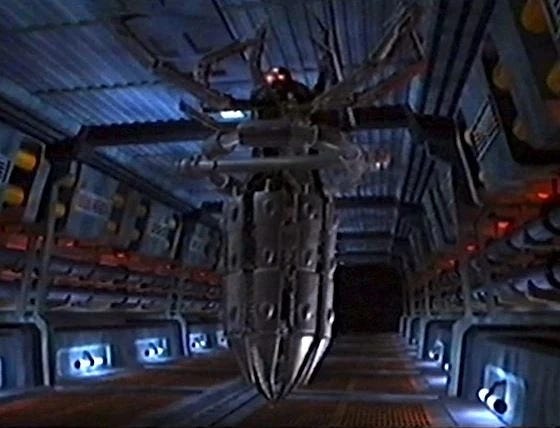
The issue is not that every one of these ideas is automatically wrong. Doctor Who can absorb almost anything. It survived Kamelion, the Kandyman, Adric, the Myrka, the in my view unfairly maligned “Love & Monsters”, and whatever emotional category we’re supposed to place The Timeless Child in. A spider-Dalek proposed for an abandoned development document is not, in itself, automatically beyond the pale.
The problem is the direction of travel. What is interesting about those specific TV movie-era proposals is not their individual weirdness, but the pattern they reveal. The mythology being developed around the 1996 film points toward a recurring temptation: to make Doctor Who more legible as a conventional franchise by giving it family secrets, origin mysteries, grand destiny arcs, redesigned monsters and a more standard heroic structure. This is what franchises often do when they become anxious about their own strangeness, and kind of what Chibnall’s era was guilty of to some extent. They explain. They systematise. They intensify. They provide lore where there used to be mystery, spectacle where there used to be suggestion.
And Doctor Who can bear some of that. But only some.
Because the Doctor is not interesting because of who his father was. The point is not that every attempt to explore Gallifreyan history or expand the mythology is misguided; Doctor Who has always added layers to its own backstory. The caution comes from the assumption that the way to strengthen the programme was to make it more like other franchises. But the core identifiers of the show work because they carry an atmosphere that is almost entirely apart from other Sci-Fi. They are conceptual shapes as much as narrative devices. Alter them too casually, and the show may retain its trademarks while losing its grammar.
That, I think, is my real fear behind the tender.
It is not that a new production company will necessarily be bad. A new creative team could be exactly what the programme needs. Both Chibnall’s run and Davies’ second era had wonderful moments and beautiful standalone stories, but they each also ended in a muddle of unresolved gestures, inflated stakes and institutional uncertainty, after both showrunners took time to detach their stories from the show’s established history (either via the Flux/Timeless Child arc or Davies’ whimsical Gods narrative). A pause may be healthy. A new showrunner may bring discipline. A new producer may look at the franchise and see possibilities that have been obscured by decades of familiar argument. Doctor Who should not be treated as the hereditary property of the same small circle of British television-folk, however talented, affectionate or foundational they have been.
But the next custodians need to understand what kind of freedom they’re inheriting. Because underneath the variation is a particular rhythm. Doctor Who is anti-authoritarian without being adolescent. It distrusts uniforms, empires, corporations, generals, priests, bureaucrats, tyrants and gods. It is suspicious of violence not because violence never appears, but because violence is usually what unimaginative people do when they have run out of better ideas. The Doctor wins, when the character is written well, not because he is the strongest person in the room, but because he can see the room differently.
That is a difficult thing to tender.
You can tender production capacity. You can tender budgets, schedules, studios, post-production pipelines, sustainability commitments, regional investment, skills development and delivery timelines. You can ask who has made large-scale drama before. You can ask who can handle effects, overseas partners, unions, secrecy, casting and publicity. All of that matters. Television is an industrial art form, and the industrial bit is not optional.
But Doctor Who also needs someone who can answer a less procurement-friendly question: do you know what this thing is?
Not in the trivia-night sense. Not in the sense of being able to name all six actors to have played Borusa. I mean: do you understand why the show’s ridiculousness is part of its seriousness? Do you understand why its Britishness matters, even when it travels everywhere? Do you understand why the Doctor should not simply be cool? Do you understand why fear in Doctor Who is often strongest when it brushes against childhood logic? Do you understand why the programme can be cosmic without becoming pompous, political without becoming a lecture, sentimental without becoming soft, and silly without becoming contemptible?
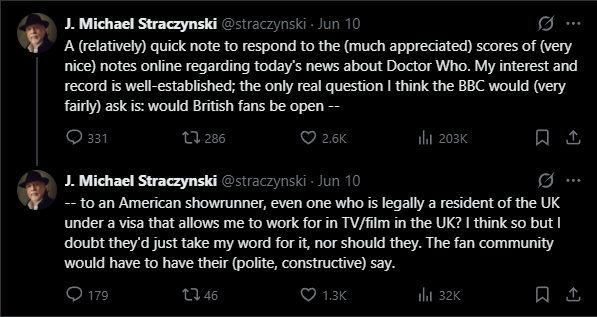
This is where J. Michael Straczynski’s public interest is revealing, whether or not he is remotely likely to be involved. The significance is not that an American writer with a major science-fiction pedigree has raised his hand. In fact, the more interesting thing is his awareness that Doctor Who is not just another science-fiction show. His pitch begin from admiration for Doctor Who’s existing identity rather than from the assumption that it needs to be rebuilt into something more normal. That does not make him the answer. But it clarifies the question.
The right person for Doctor Who does not have to be British… but the show’s Britishness cannot be incidental. They do not have to be a lifelong fan… but indifference to the programme’s history would be alarming. They do not have to preserve every old habit… but contempt for those habits would be fatal.
What they need is not ownership, but custody. Ownership asks what can be extracted from a property. Custody asks what must be carried forward so that change remains meaningful. Ownership sees the TARDIS as a brand asset. Custody sees it as a promise: that the universe is stranger, funnier, scarier and more morally urgent than the people in charge insist; that the small and disregarded matter; that cleverness is better than conquest; that monsters can be defeated without becoming one.
Doctor Who will survive. I am fairly sure of that. The BBC has every reason to bring it back, and almost no good reason to let one of its most recognisable creations dissolve into folklore and Blu-ray box sets. The more interesting question is whether the next version will understand survival as more than continuation.
Because the TARDIS can land almost anywhere. That has always been the point. It can land in a quarry, a council estate, a spaceship, a school, a battlefield, a library, a nightmare, a joke, a Christmas special, or the middle of some future tender document nobody should have to read unless professionally required.
But wherever it lands next, someone has to know why it is bigger on the inside.