

There is a comforting way to think about voting, particularly among people who care quite a lot about politics. You vote for the party that most closely expresses your values. You vote with your conscience. You vote for the kind of politics you want to see in the world. You walk into the polling station, make your small democratic mark, and emerge, if not quite morally cleansed, then at least politically legible.
This is not a ridiculous instinct. In many ways, it is a noble one. There is something grim about reducing democracy to a permanent spreadsheet of lesser evils, tactical squeezes, marginal wards and grim-faced calculations about which candidate is least likely to produce the worst available outcome. Nobody joins a political party because they are excited by the phrase ‘locally best-placed alternative’. Nobody campaigns in the rain because their soul is stirred by efficient anti-opponent vote consolidation. At least, if they do, they should probably get out more.
But there is a problem with treating a vote as though it were primarily an expression of personal identity. The problem is not that values do not matter. The problem is that electoral systems matter more.
In a proportional system, voting for the party that most closely represents your views is, broadly speaking, a reasonable way of building political representation. The votes stack up; the seats follow, more or less; coalition-building then happens in the open. But in first-past-the-post, the meaning of your vote is not exhausted by what you intended it to mean. You may think you’re registering a protest, rewarding courage, punishing timidity, expressing frustration, or refusing to compromise. The counting system does not care. It asks one brutally simple question: who got more votes than the next person?
That distinction matters because, in May 2026, a large number of progressive voters appear to have voted as though they lived in one system, while their votes were counted under another.
The Green surge was real
I’m going to use the city of Sheffield, in South Yorkshire, as an example here, for reasons which I will explain later. And before I get too far, it’s very important to start by saying this clearly: the Green Party’s rise in Sheffield was not bad, stupid or illegitimate.
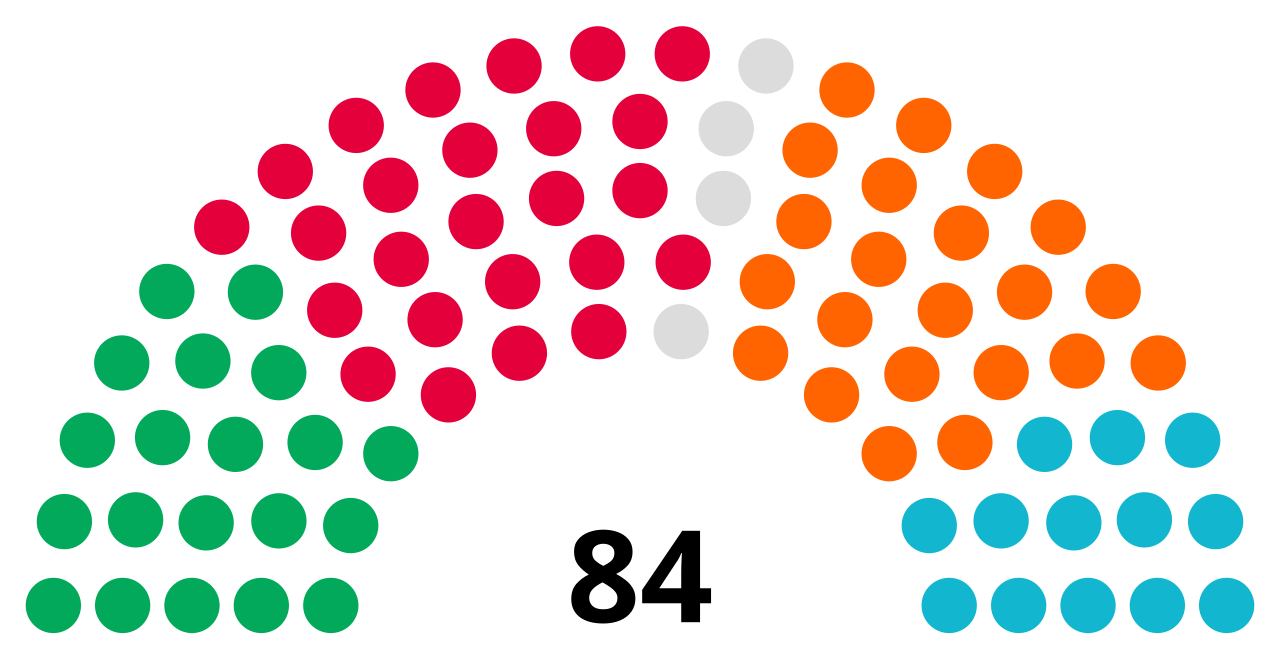
The Greens had an excellent election. They won six additional council seats, took 47,886 votes across the city, reached 27.5% of the vote share, and could plausibly describe themselves as the most popular party in Sheffield by votes cast. That is not a rounding error or a protest vote in the old dismissive sense. It is a serious political event.
Nor did it come from nowhere. The national context mattered. Labour entered the 2026 local elections as an unpopular government, facing disillusionment from parts of the coalition that had delivered its landslide only two years earlier. YouGov’s post-election polling found that only 46% of 2024 Labour voters who voted in the 2026 local elections stayed with Labour, while 22% switched to the Greens and 16% to the Liberal Democrats. It also, tellingly, found that voters were more likely to say their choice was driven by which party best represented their values than by local issues, and that Green voters were particularly likely to frame their decision in values terms.
There was also a new national Green story. Zack Polanski’s leadership had given the party greater visibility, a sharper populist edge, and a narrative of class politics which has been lacking from the Green offer for decades; by late 2025, the Guardian was already reporting a major membership surge under his leadership. Then came Gorton and Denton. On 26 February 2026, Hannah Spencer won the by-election for the Greens with 14,980 votes, ahead of Reform on 10,578 and Labour on 9,364. For Green supporters, and for many Labour voters looking for permission to defect leftwards, that result seemed to show something important: Greens could win in unexpected places. They were not merely a repository for nice opinions in safe middle-class neighbourhoods, as they had been in the Caroline Lucas era. Maybe they could beat Labour and Reform at the same time?
That was the story many progressive voters took into May.
The difficulty is that Sheffield is not one political place. It is several.
Sheffield is not one election
Sheffield is a useful city through which to think about this problem because its political geography is unusually stark.
Unlike many other cities in the UK, the city’s social divides are not remotely evenly scattered. University of Sheffield public health mapping describes a clear east-west gradient in life expectancy, with people west of the city centre tending to live longer than those in the east. It also notes that Sheffield’s more affluent areas tend to lie west of the city centre, while the east is shaped more heavily by former industrial areas. This is not just a sociological curiosity. It matters electorally because the same political gesture does not have the same effect in different parts of the city.
In parts of central, western and south-western Sheffield, a Green vote in 2026 often helped elect or re-elect a Green councillor. In Ecclesall, Graves Park, Nether Edge and Sharrow, Walkley, Manor Castle, Burngreave, City, Hillsborough, Gleadless Valley and Broomhill and Sharrow Vale, Green votes translated into Green representation. In those places, whether one welcomes or regrets the outcome, the vote did what its voters probably intended it to do.
But in many of the wards where Reform won, the Green surge did something very different. It did not build Green representation. It helped fragment the anti-Reform vote.
That is not a moral judgement on every individual voter. No voter can be expected to run a full ward-level model in their head while standing in a school hall with a pencil. Parties have responsibilities too: to campaign properly, to make tactical realities clear, and to earn the votes they ask for. But once the votes are counted, the arithmetic is not subtle.
In Stocksbridge and Upper Don, in the northern edge of the city, Reform won with 2,554 votes. The Liberal Democrats came second with 2,208. Labour took 1,160 and the Greens 638. A clear majority of voters did not vote Reform. But the non-Reform vote was divided in a way that allowed Reform to win.
In Park and Arbourthorne, in the south of the city, Reform won with 1,740 votes. Labour came second with 1,287. The Greens took 1,009, the Liberal Democrats 193, and the Conservatives 210. Again, Reform did not need to persuade most people. It only needed its opponents to disperse.
In Shiregreen and Brightside in the post-industrial northeast, Reform won with 1,671 votes. Labour took 951, the Greens 707, and the Liberal Democrats 192. The combined Labour-Green-Lib Dem vote was higher than Reform’s total. It just did not belong to one candidate.
In East Ecclesfield (northeast) Reform won with 2,365 votes. The Liberal Democrats took 1,850, Labour 1,203, and the Greens 442. In Mosborough (southeast), Reform won with 2,114, while the Liberal Democrats, Labour and Greens together polled 2,730. In the southeastern Woodhouse ward, Reform won with 1,987; Labour, the Liberal Democrats and the Greens together reached 2,019.
Beighton (also southeast) is especially instructive because it shows why this is not simply a complaint about Green voters. Reform took both seats up there. The two Reform candidates received 2,197 and 1,989 votes; the two Liberal Democrats received 1,701 and 1,636; Labour’s two candidates received 683 and 655; and the Greens received 436 and 371. The point is not that Green voters alone handed the ward to Reform. It is that Labour and Green voters in that ward were participating in a contest their preferred parties were not in a position to win.
That may feel unfair. It may even be unfair. But unfairness is quite a large part of the point.
The fantasy of expressive voting
The fantasy exposed by these results is not that Green voters are uniquely vain, or that Labour voters are uniquely entitled, or that Liberal Democrats are uniquely convinced that every ward is secretly a Lib Dem target if you only deliver enough Focus leaflets.
The fantasy is that voting for a progressive party is primarily an expression of personal virtue, rather than a decision with institutional consequences.
For a certain kind of voter, ‘I voted Green’ does not simply mean ‘I thought the Green candidate was best placed to win here’. It can mean: I care about climate change; I opposed Labour’s position on Gaza; I want politics to be bolder; I refused to reward triangulation; I did not let myself get blackmailed by lesser-evilism. For another kind of voter, ‘I voted Labour’ can mean: I am on the side of working people; I want to stop the far right; I believe in public services; I am not indulging protest politics. For some Liberal Democrat voters, especially in wards where they are the established anti-Reform or anti-Conservative force, the vote carries its own localised version of civic seriousness: we know how to win here; we do the ward work; we are not playing at politics.
All of those identities may contain some truth. None of them changes the arithmetic.
This is the uncomfortable thing about first-past-the-post. It strips votes of their intended emotional complexity. It does not ask whether your Green vote was anti-Reform in spirit. It does not ask whether your Labour vote was cast by someone who would have preferred the Lib Dems to Reform. It does not ask whether your Lib Dem vote was a small-l liberal protest against both Labour complacency and Reform populism. It simply counts.
And if the anti-Reform vote is split three ways, Reform can win with a minority.
This is why ‘vote with your conscience’ is not quite the innocent phrase it appears to be. Conscience is not irrelevant. It is one of the reasons people enter politics in the first place. But conscience without strategy can become self-indulgence, particularly when the cost is paid by someone else.
The Green vote in Broomhill and Sharrow Vale did not carry the same consequences as the Green vote in Park and Arbourthorne. A Labour vote in Darnall (narrowly won) did not mean the same thing as a Labour vote in Beighton (distantly lost). A Lib Dem vote in Dore and Totley did not mean the same thing as a Lib Dem vote in Shiregreen and Brightside. The same party label, placed in a different local contest, performed a different political function.
This is why voting cannot simply be treated as a personality trait. A ballot paper is not a mirror. It is a lever.
Sheffield’s progressive alliance problem
There is an additional irony in Sheffield, because this is not a city that has been obviously incapable of plural progressive politics.
For the five years before the 2026 election, Sheffield City Council was run by a coalition government - first of Labour and the Liberal Democrats, and later adding the Greens. And under their committee system, all political groups are represented on committees in proportion to their seats. After the 2026 election, the rotating cast of the progressive alliance rotated again; Labour and the Greens formed a joint administration, with the Liberal Democrats moving into opposition, while the council again emphasised proportional committee representation and cross-party involvement in decision-making.
In other words, Sheffield is not an example of a city where Labour, Greens and Liberal Democrats cannot work together. Quite the opposite. It is one of the better examples of grown-up pluralism in local government.
That makes the election result more revealing, not less.
Supporters of proportional representation often argue that British politics would become more mature if voters were allowed to express their genuine preferences and parties were then required to negotiate. Sheffield’s recent council history gives some strong support to that view. The city has already lived with coalition, committee governance and cross-party decision-making. It has not collapsed into the sea, though given the state of local government finance, one should not tempt fate.
But the voting system has not caught up with the political reality. Sheffield voters are behaving in an increasingly plural political culture while still voting under a system that punishes pluralism. That is the problem. A Labour-Green-Lib Dem council chamber may be capable of cooperation after the election. But in ward after ward, Labour, Green and Lib Dem candidates still have to fight one another before the election, even where the obvious beneficiary of that fight is Reform.
So Sheffield becomes a kind of democratic contradiction. In the Town Hall, progressive parties can share power. On the ballot paper, their voters can split the vote and hand seats to a party most of them did not want.
That is not a sign that voters are stupid. It is a sign that the system is stupid. But knowing that the system is stupid does not exempt voters or parties from having to understand it.
Tactical voting is not betrayal
One of the reasons tactical voting is so emotionally difficult is that it feels like a kind of disloyalty.
For party members, this is obvious. Asking a Labour member to vote Liberal Democrat, or a Green member to vote Labour, or a Liberal Democrat member to vote Green, feels like asking them to suspend a part of their political identity. Parties are not merely administrative vehicles. They are communities, histories, habits, friendships, grudges, WhatsApp groups, grudges about WhatsApp groups, and a surprisingly large number of people who know exactly which clipboard belongs to which campaign group.
But most voters are not party members. Their attachments are looser, less procedural, and often more values-based. For them, tactical voting can feel less like organisational betrayal and more like moral compromise. Why should they vote for a party they do not especially like? Why should Labour be rewarded for disappointing them? Why should the Lib Dems inherit votes from people who do not share their politics? Why should the Greens be treated as a safe protest in some places and a dangerous indulgence in others?
These are not silly questions. Parties that want tactical support have to earn it. Labour cannot assume that left-leaning voters will come home because the alternative is worse. The Liberal Democrats cannot assume that being locally best placed absolves them of the need to make a genuinely positive case. The Greens cannot claim the moral energy of progressive protest while ignoring the wards where they are not realistically in contention.
But tactical voting is not the abandonment of principle. It is the application of that principle under the constraints that reality places in front of you.
If your principle is to increase Green representation, then voting Green in a winnable Green ward makes sense. If your principle is to keep Reform out, then voting Green in a ward where the contest is Labour versus Reform, or Lib Dem versus Reform, does not serve that principle at all. The same is true in reverse. A Labour voter who wants to stop Reform in a Lib Dem-facing ward is not being more principled by voting Labour anyway. They are confusing the party they prefer nationally with the electoral instrument available locally.
This is the boring-but-true answer at the heart of the argument: local viability matters.
Not because it is inspiring. Not because it looks good on a poster. Not because anyone dreams of building a politics around the phrase “please check the previous ward result before making a symbolic point”. But because first-past-the-post makes it matter.
The cost of getting it wrong
The consequences of this are not abstract.
When Reform wins council seats on a minority of the vote, it gains councillors, resources, visibility, casework operations, local legitimacy, committee places, data, social media content, and proof of momentum. It gains the ability to say: we are not merely a national protest vehicle; we are winning here. In local politics, that matters. Parties become real by occupying institutions.
This is one of the great asymmetries of protest politics. A voter may experience their ballot as a message sent to Labour, or to the Greens, or to the political class in general. But the institution receives it as a seat for somebody else.
That is why the phrase ‘sending a message’ is so often inadequate. Electoral systems do not send messages with much precision. They allocate power. A voter may believe they have sent Labour a warning about Gaza, or climate, or public services, or the government’s timidity. But if the local result is a Reform councillor, then the message arrives with a councillor attached.
This is not an argument for shutting down dissent. It is an argument for taking consequences seriously.
The progressive vote is not one thing. It is a bundle of competing instincts: environmental urgency, social democracy, liberal constitutionalism, anti-racism, local competence, anti-austerity politics, public service reform, anger about Gaza, anger about Westminster, anger about potholes, anger about the price of everything, and, in some cases, anger at being asked yet again to vote for a party that has disappointed you.
But first-past-the-post does not reward the richness of that bundle. It rewards concentration.
That means progressive politics has to learn a discipline that does not always come naturally to it. It has to distinguish between a party being right, a party being preferable, and a party being viable. It has to distinguish between a vote that expresses a value and a vote that advances it. It has to stop treating tactical intelligence as moral cowardice.
The progressive vote is not a personality trait
There is a case, after Sheffield, for humility from everyone.
Labour should not look at Reform gains in its former heartlands and conclude that the only problem was irresponsible Green voters. That would be far too convenient. If Labour loses enough trust that its previous voters are willing to take risks with the local consequences, that is Labour’s problem too.
The Greens should not look at their citywide vote share and conclude that every Green vote was equally productive. Their surge produced councillors in some places. In others, it helped create the conditions for Reform to win.
The Liberal Democrats should not imagine themselves outside the story. In several wards, they were either the best-placed anti-Reform alternative or part of the fragmentation that allowed Reform through. Their local strength can make them essential in some contests and irrelevant in others. The trick is knowing which is which.
And voters, too, have to give up a comforting fiction. A vote is not a little autobiography. It is not a certificate of virtue. It is not a consumer preference, or a dating profile for your political soul.
It is an intervention in an electoral system.
Sometimes that intervention says exactly what you meant it to say. Sometimes it says something else entirely. Sometimes it lets you elect the person you wanted. But only sometimes.
That is the hard lesson of Sheffield in 2026. Reform won the most seats, but the city did not suddenly become a Reform city. In ward after ward, most voters did not vote Reform. But Reform did not need Sheffield to become a Reform city. It needed progressive voters to behave as though their private meaning mattered more than the public count.
The progressive vote is not a personality trait. It is not proof of inner cleanliness. It is not a reusable badge of moral distinction. In the system we actually have, it is a lever. Sometimes it opens the door to the politics you want. Sometimes it opens the door to the politics you most fear.
The trick is learning the difference before the count, not afterwards.